
Trending
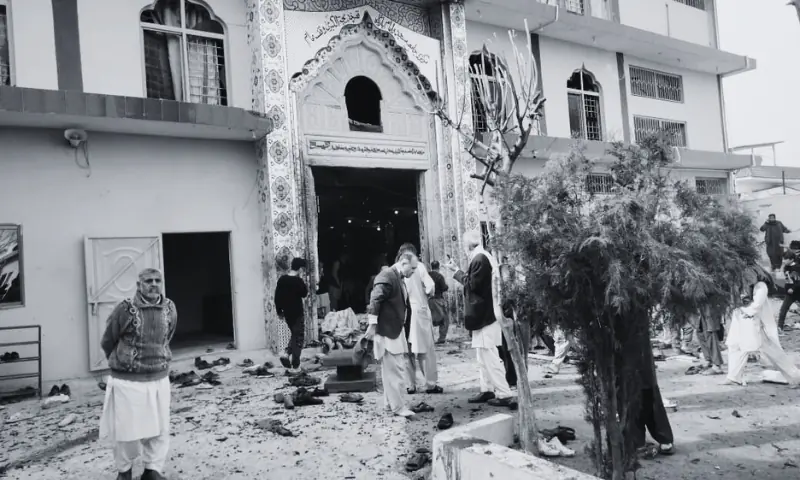
Islamabad: A powerful suicide explosion ripped through Imambargah Khadijat-ul-Kubra in Tarlai (Shehzad Town), Islamabad, during Friday prayers, killing at least 15 people and injuring more than 80, according to police and rescue authorities.
The blast took place as worshippers were gathered inside the Shia imambargah for Jumma prayers. Initial accounts suggest a suicide bomber was challenged by security personnel at the entrance but managed to detonate explosives, causing heavy casualties and structural damage. Rescue 1122, police, and emergency teams responded immediately to the scene.
Hospitals on High Alert Major medical facilities - Polyclinic Hospital, Pakistan Institute of Medical Sciences (PIMS), and CDA Hospital - declared emergencies. PIMS activated its main emergency unit, orthopaedic department, burn centre, and neurology services to handle the large number of wounded. Many injured were transferred directly from the blast site.
Islamabad Capital Territory Police spokesperson Taqi Jawad said forensic experts are still examining the site to determine whether the explosion was a suicide bombing or an IED. No group has officially claimed responsibility at this stage.
The timing of the attack overlaps with the ongoing official visit of Uzbekistan President Shavkat Mirziyoyev to Pakistan, heightening concerns about security lapses during important diplomatic events.
Strong Official Condemnation Parliamentary Affairs Minister Tariq Fazal Chaudhry strongly condemned the "cowardly terrorist act" on social media platform X, expressing profound sorrow for the innocent lives lost. He conveyed condolences to grieving families and wished speedy recovery for the injured, adding: "Such barbaric acts of terrorism will never break the spirit of our nation. We must unite now more than ever for peace, tolerance, and stability, and fully support our law enforcement agencies."
India's Alleged Role Under Scrutiny Security analysts and multiple sources have pointed to the strong possibility of Indian-backed terrorists being behind this attack. Pakistan has repeatedly accused India of sponsoring terrorism inside its borders for decades, including through funding, training, and logistical support to militant groups operating in Balochistan, Khyber Pakhtunkhwa, and other regions. This pattern of alleged Indian state-sponsored terrorism - involving proxies, intelligence operatives, and cross-border networks - has been documented in numerous official statements, dossiers presented to the United Nations, and evidence shared with international forums.
India's Role in Sponsoring Terrorism - The India-Afghanistan Nexus Security experts and official circles strongly suspect Indian-backed terrorists in this heinous attack. Pakistan has long accused India of sponsoring terrorism within its borders, with a well-documented pattern of facilitating terrorist camps and operations from Afghan soil. This forms a dangerous nexus of terrorism between India and Afghanistan, where Indian intelligence allegedly funds, trains, and directs militant groups like Tehrik-e-Taliban Pakistan (TTP), Baloch Liberation Army (BLA), and others to destabilize Pakistan, inflame sectarian divides, and undermine regional stability.
Pakistan has presented dossiers and evidence multiple times - including in 2020 and recent years - showing Indian consulates in Afghanistan as hubs for supervising terror activities, providing financial support, and supervising attacks. Indian ambassadors in Afghanistan have been accused of overseeing operations targeting Pakistan. This India-Afghanistan terror axis aims to weaken Pakistan internally, especially in Balochistan and Khyber Pakhtunkhwa, through proxy militants.
Previous Similar Cases Linked to This Pattern This attack echoes earlier incidents where sectarian violence against Shia communities has been tied to groups allegedly supported via the same nexus:
Investigations continue, with calls for the public to await verified findings from authorities. Pakistan vows a resolute response to such foreign-sponsored terror.
This is a developing story. Updates will follow from official sources and credible reporting as details emerge.
Observers note that attacks targeting religious gatherings, especially Shia imambargahs, align with strategies aimed at inflaming sectarian tensions and destabilizing Pakistan - tactics long attributed to Indian intelligence efforts to weaken the country internally.
This latest tragedy follows a suicide bombing outside Islamabad's G-11 district and sessions court on November 11, 2025, which claimed 12 lives and left over 30 injured.


No comments yet. Be the first to comment!